Gibson Home Culinary Basics 74-Piece Kitchen Set: A Comprehensive Editorial Review
Equipping a kitchen from scratch presents significant logistical and financial challenges, particularly for first-time homeowners, college students establishing independent living spaces, or individuals relocating to new residences. The Gibson Home 74-piece kitchen set addresses this challenge through a consolidated approach: packaging cookware, dinnerware, utensils, storage solutions, and serving pieces into a single comprehensive collection.
This editorial review examines the Gibson Home Culinary Basics 74-piece kitchen combo set from a purely analytical perspective, evaluating component quality, material construction, practical functionality, and overall value proposition. The analysis focuses on verifiable product specifications and real-world usability considerations without promotional bias or customer testimonials.
Table of Contents
- Complete Set Composition & Categories
- Cookware Components Analysis
- Dinnerware & Glassware Components
- Kitchen Utensils & Tools
- Cutlery & Flatware Components
- Storage Solutions & Accessories
- Material Construction & Durability
- Care Requirements & Maintenance
- Who This Set Is Suitable For
- Value Analysis & Considerations
- Final Editorial Assessment





Complete Set Composition & Categories
Gibson Home manufactures kitchen and dining products spanning multiple categories, positioning its offerings within the mid-range market segment that emphasizes accessibility and comprehensive coverage over premium individual components. The company’s multi-category approach allows consolidation of diverse kitchen essentials under unified branding and packaging.
The Gibson Home 74-piece kitchen set distributes its components across seven distinct product categories, creating a complete kitchen ecosystem within a single purchase. This systematic organization addresses the primary cooking, serving, and dining requirements for household meal preparation and entertaining scenarios.
The component breakdown includes cookware elements (five pieces including lids), bakeware (one piece), kitchen utensils and tools (14 pieces), cutlery (six pieces), measuring implements (10 pieces total for cups and spoons), dinnerware (12 plates and bowls), glassware (four tumblers), storage containers (five glass bowls with lids), flatware (12-piece stainless steel set), and specialized tools (bottle opener, pizza cutter, can opener). Each category addresses specific functional requirements within the meal preparation and service workflow.
Cookware Components Analysis
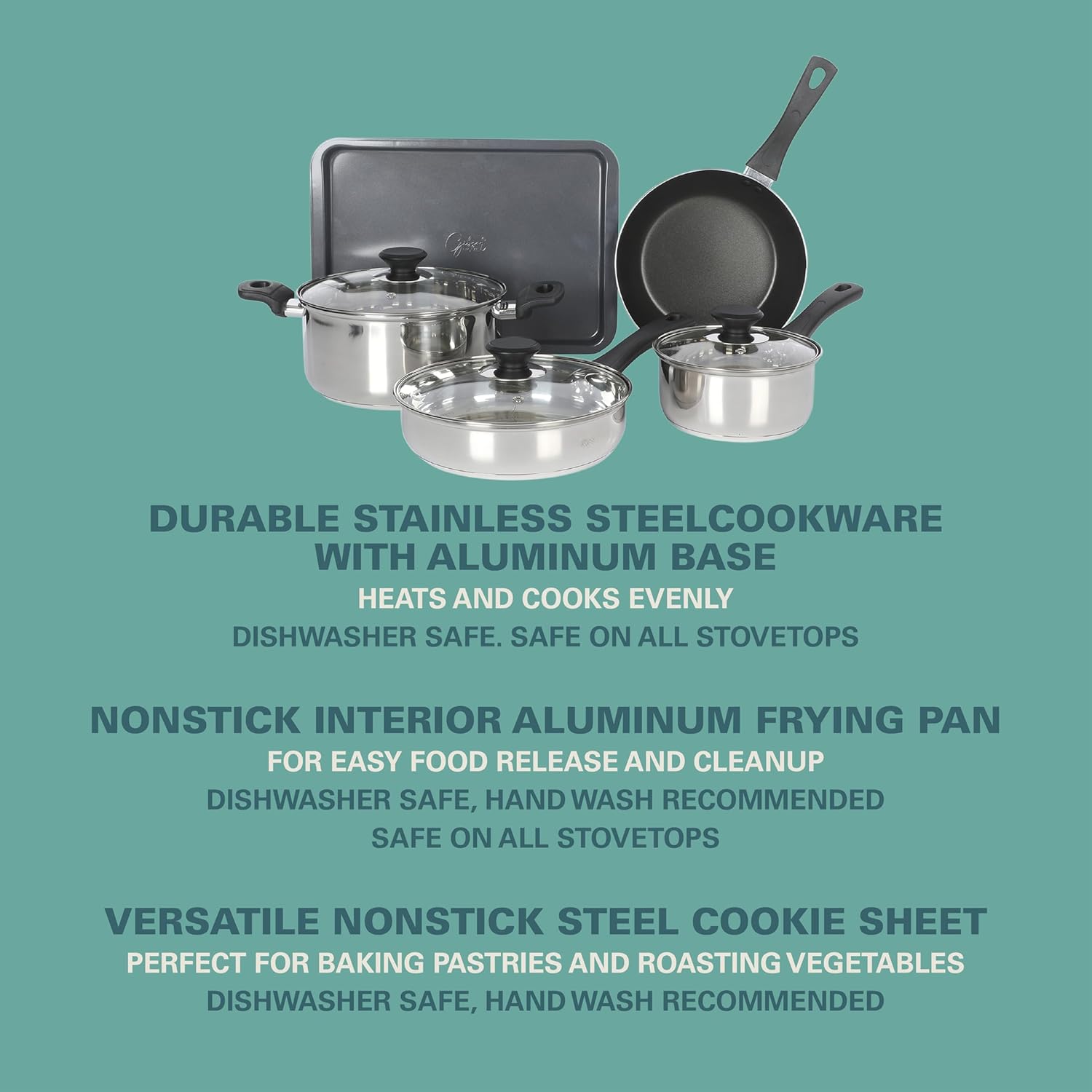
The cookware segment comprises four primary vessels with corresponding lids: a 1.5-quart saucepan, an 8.7-inch sauté pan, a 4-quart Dutch oven, and a 9-inch frying pan. This configuration provides coverage for standard cooking techniques including boiling, sautéing, braising, and pan-frying.
Three of the four cookware pieces utilize stainless steel construction, offering compatibility with all cooktop types including induction surfaces. Stainless steel provides durability and resistance to corrosion while maintaining aesthetic appeal through its reflective surface finish. The tempered glass lids enable visual monitoring of cooking progress without removing the cover, which helps retain heat and moisture during the cooking process.
The 9-inch frying pan employs aluminum construction with nonstick interior coating. Aluminum’s thermal conductivity characteristics facilitate rapid heat distribution across the cooking surface, reducing the likelihood of hotspot formation that can cause uneven cooking results. The nonstick coating reduces the need for cooking fats and simplifies food release during serving and cleanup operations.
The size distribution of the cookware components addresses different volume requirements: the 1.5-quart saucepan handles small-batch preparations such as sauces and grains, the 8.7-inch sauté pan accommodates vegetable preparation and protein portions for two to three servings, the 4-quart Dutch oven provides sufficient capacity for soups and one-pot meals serving four to six people, and the 9-inch frying pan manages standard breakfast preparations and quick-cooking proteins.
Dinnerware & Glassware Components
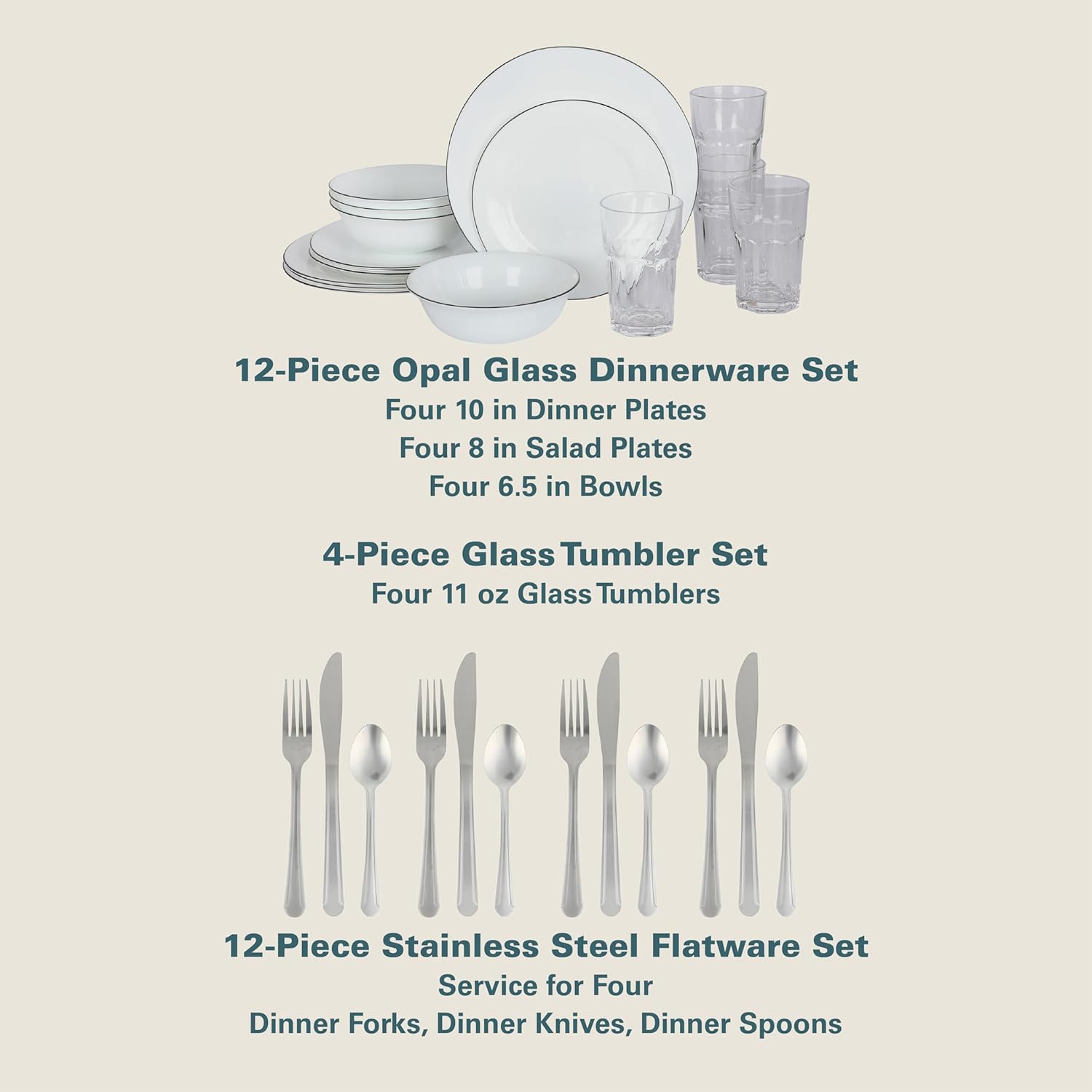
The dinnerware collection consists of 12 opal glass pieces distributed across three size categories: four 10-inch dinner plates, four 8-inch salad plates, and four 6.5-inch bowls. This four-place setting configuration accommodates small household dining or intimate entertaining scenarios.
Opal glass construction provides a ceramic-like appearance while maintaining the durability characteristics associated with tempered glass materials. The white opal finish creates a neutral backdrop that complements diverse table settings and food presentations without introducing competing visual elements. The non-porous glass surface resists staining from acidic or pigmented foods that commonly affect ceramic glazes.
The three-tier plate and bowl sizing follows conventional Western dining service patterns. The 10-inch dinner plates provide adequate surface area for main course presentations including protein, starch, and vegetable components. The 8-inch salad plates serve dual purposes for appetizer courses and dessert presentations. The 6.5-inch bowls handle soups, cereals, side dishes, and individual dessert portions.
Four 11-ounce glass tumblers comprise the glassware component. The tumbler style provides versatility for cold beverages including water, juice, soft drinks, and iced coffee preparations. The transparent glass construction allows beverage identification and volume assessment at a glance.
Kitchen Utensils & Tools
The utensil and tool category represents the most diverse component segment, containing 14 distinct implements addressing various food preparation, cooking, and serving requirements. The collection integrates multiple material types—nylon, bamboo, silicone, and stainless steel—each selected for specific functional properties.
Nylon utensils include a slotted turner, spoon, and slotted spoon. Nylon construction provides heat resistance suitable for use with nonstick cookware surfaces without causing scratching or coating damage. The slotted designs facilitate liquid drainage when transferring foods such as vegetables from cooking liquids or fried items from oil.
Bamboo components consist of a turner and spoon. Bamboo offers natural antimicrobial properties and sustainable sourcing compared to plastic alternatives. The material exhibits sufficient hardness for stirring and turning operations while maintaining gentleness on cookware surfaces.
A silicone spatula addresses scraping and folding tasks, particularly in baking applications where complete bowl evacuation maximizes ingredient utilization. Silicone’s flexibility allows conforming to curved bowl surfaces while its heat resistance permits use in cooking applications up to typical stovetop temperatures.
Stainless steel tools include a whisk, grater, can opener, tongs, bottle opener, and pizza cutter. The whisk incorporates loops for incorporating air into batters and emulsifying dressings. The grater provides surface preparation for cheese, vegetables, and citrus zest. Tongs offer controlled food manipulation during cooking and serving. The specialized openers address common packaging access requirements.
Five measuring cups and five measuring spoons provide standardized volume measurement for recipe execution. These implements ensure ingredient proportion accuracy, which directly impacts cooking and baking outcome consistency, particularly in preparations where chemical reactions depend on precise ratios.
Cutlery & Flatware Components
The cutlery segment includes six stainless steel knives addressing basic cutting requirements. While specific knife types are not detailed in product specifications, standard six-piece knife sets typically include a chef’s knife for primary cutting tasks, a serrated bread knife, a utility knife for medium-sized items, a paring knife for detail work, kitchen shears, and often a carving or slicing knife.
Stainless steel blade construction provides rust resistance and maintains edge retention through moderate use. The material requires less maintenance than high-carbon steel alternatives while offering adequate performance for standard residential cutting applications including vegetable preparation, meat trimming, and bread slicing.
A 12-piece stainless steel flatware set provides table service implements for four place settings. Standard flatware configurations include dinner forks, salad forks, dinner knives, and tablespoons, creating a three-piece setting that addresses most dining scenarios. The stainless steel construction ensures durability through repeated dishwashing cycles and daily use.
Storage Solutions & Accessories
Five glass storage bowls with corresponding lids address food preservation and leftover management. Glass construction offers advantages over plastic alternatives including stain resistance, odor neutrality, and microwave safety without concerns about chemical leaching or material degradation at elevated temperatures.
The transparent glass allows visual identification of stored contents without opening containers, reducing unnecessary exposure to air and temperature fluctuations that accelerate spoilage. The lid components create seals that minimize air exchange, extending refrigerated storage duration compared to uncovered storage methods.
The inclusion of storage solutions within the complete kitchen set recognizes the practical reality that meal preparation often generates leftover portions requiring proper storage to prevent waste and facilitate meal planning across multiple days.
The 15-inch cookie sheet provides a flat baking surface suitable for pastries, roasted vegetables, and sheet pan dinner preparations. The larger dimension accommodates multiple portions or food items simultaneously, improving cooking efficiency for batch preparations.
Material Construction & Durability
Material construction varies across the Gibson Home 74-piece kitchen set components to balance performance requirements with cost considerations. The stainless steel cookware offers longevity and maintains appearance through extended use, while the aluminum frying pan prioritizes heat distribution efficiency. The opal glass dinnerware provides ceramic-like aesthetics with glass durability.
The utensil material diversity—nylon, bamboo, silicone, and stainless steel—reflects functional optimization rather than aesthetic uniformity. Each material addresses specific use cases: nylon for nonstick-safe cooking, bamboo for sustainable alternatives, silicone for flexibility, and stainless steel for durability in high-stress applications like whisking and grating.
Durability expectations for bundle sets typically fall below individual premium components but exceed disposable or ultra-budget alternatives. The stainless steel elements in this set should maintain structural integrity and functional performance for several years under normal residential use patterns. The nonstick coating on the frying pan represents the most vulnerability-prone component, with expected degradation after one to three years depending on usage frequency and care practices.
Care Requirements & Maintenance
Care requirements vary by component material and construction. The stainless steel cookware carries dishwasher-safe designation, allowing automated cleaning without hand-washing labor. However, hand washing often extends the aesthetic life of stainless steel by preventing water spot accumulation and maintaining surface shine.
The aluminum nonstick frying pan designation indicates dishwasher safety, though manufacturers typically recommend hand washing to preserve nonstick coating integrity. Abrasive scrubbers and high-alkaline detergents can accelerate coating degradation, reducing the nonstick performance lifespan.
The cookie sheet requires hand washing only. This restriction suggests either a coating or material composition that may react adversely to dishwasher conditions, such as seasoned surfaces or specialty finishes that dishwasher detergents could strip or discolor.
Glass dinnerware and storage bowls generally tolerate dishwasher cleaning without performance degradation, though temperature shock from extreme temperature transitions can cause cracking in tempered glass products. Gradual temperature changes reduce thermal stress on glass components.
Utensils require varying care levels based on material: nylon and silicone components tolerate dishwasher cleaning, bamboo items benefit from hand washing to prevent wood grain expansion and cracking, and stainless steel tools handle dishwasher cycles without issue. Knife edges maintain sharpness longer when hand washed, as dishwasher contact with other utensils can cause micro-chipping along cutting edges.
Who This Set Is Suitable For
The Gibson Home 74-piece kitchen set addresses specific use cases and user profiles where comprehensive coverage outweighs component specialization. Primary suitability scenarios include:
- First-time homeowners or apartment renters establishing independent kitchens from zero inventory, where purchasing individual categories separately would require multiple shopping trips and budget allocation decisions
- College students or young professionals furnishing living spaces with limited time and interest in researching individual product categories
- Temporary housing situations including corporate relocations, extended travel assignments, or vacation properties where immediate functionality matters more than long-term optimization
- Gift-giving scenarios for weddings, housewarmings, or graduations where a complete functional kit provides immediate usability
- Budget-conscious households prioritizing comprehensive coverage over premium individual components
- Secondary kitchens in recreational vehicles, guest houses, or basement apartments requiring full functionality with minimal investment
This set may be less suitable for:
- Serious cooking enthusiasts who prioritize cookware performance characteristics and prefer investing in fewer, higher-quality pieces
- Existing kitchens with established cookware collections where redundant items create storage challenges
- Households with specialized dietary requirements or cooking styles demanding specific equipment
- Large families requiring service pieces beyond the four-setting dinnerware configuration
Value Analysis & Considerations
The value proposition of comprehensive kitchen sets centers on consolidated purchasing versus individual component acquisition. When evaluating 74 separate items purchased individually, the cumulative cost typically exceeds bundled set pricing substantially, particularly when accounting for time investment in product research and multiple transaction fees.
However, bundle economics involve trade-offs between coverage breadth and component quality. Material quality and construction necessarily reflect economies of scale rather than artisan craftsmanship or premium materials in this price category.
The practical value calculation depends on utilization rates across all components. Users who actively employ the majority of the 74 pieces realize higher value than those who utilize only a subset while the remainder occupies storage space. The four-place-setting dinnerware limitation means households regularly serving more than four people will require supplemental purchases, partially negating the complete-kitchen premise.
For first-kitchen scenarios, the immediate functionality of having all basic implements available justifies the bundled approach even if eventual component upgrades occur over time. The set provides a functional baseline that allows cooking activities to commence immediately while users identify which specific items merit future quality upgrades based on actual usage patterns rather than theoretical needs.
Final Editorial Assessment
The Gibson Home 74-piece kitchen set represents a consolidation strategy that prioritizes comprehensive coverage and immediate functionality over individual component excellence. This approach aligns with specific use cases—particularly first kitchens, temporary situations, and budget-conscious setups—where establishing complete baseline functionality addresses the primary need.
The material selection demonstrates pragmatic choices balancing performance, durability, and cost constraints. Stainless steel cookware provides longevity and cooktop versatility including induction compatibility. The aluminum nonstick frying pan offers effective heat distribution for everyday cooking. Opal glass dinnerware delivers aesthetic appeal with practical durability. The diverse utensil materials reflect functional optimization rather than arbitrary variety.
The 74-component count creates marketing impact but requires critical evaluation regarding actual utility. Some pieces—such as measuring implements, basic utensils, and primary cookware—receive frequent use across diverse cooking styles. Other components may see occasional deployment depending on household cooking patterns and entertaining frequency. The value realization directly correlates with component utilization rates.
From a pure functionality perspective, this set delivers operational capability across the meal preparation spectrum from ingredient preparation through cooking, serving, dining, and storage. Users can prepare complete meals and host small gatherings using only the included components, fulfilling the kitchen-in-a-box positioning.
The quality tier reflects the accessible price point. These are serviceable implementations of standard kitchen items rather than heirloom-quality pieces designed for decades of daily use. For users seeking immediate kitchen functionality with budget constraints or temporary needs, this trade-off proves acceptable. For cooking enthusiasts prioritizing performance and longevity, selective investment in fewer premium pieces typically provides superior long-term value.
As an Amazon Associate I earn from qualifying purchases.
View on Amazon




No Responses