Winix 5510 Air Purifier: An In-Depth Editorial Review
Indoor air quality management has evolved beyond basic particle filtration, with contemporary systems incorporating multiple purification stages and automated environmental monitoring. This editorial review examines the Winix 5510 air purifier, focusing on its four-stage filtration architecture, sensor-driven automation capabilities, and operational characteristics across different room sizes and air quality scenarios.
This article is written from a neutral, research-driven perspective. No pricing comparisons, no customer opinions, and no promotional claims — only verifiable product specifications, technical analysis, and everyday usability considerations. The goal is to help readers understand whether the Winix 5510 air purifier aligns with their specific indoor air quality requirements and living space configurations.
Table of Contents
- Design & Physical Construction
- Four-Stage Filtration System
- PlasmaWave Technology Explained
- Room Coverage & Air Processing Capacity
- Smart Sensor System & Automation
- Operating Modes & Controls
- Filter Maintenance & Replacement
- Who This Air Purifier Is Suitable For
- Real-World Performance Considerations
- Final Editorial Thoughts




Design & Physical Construction
Winix is a manufacturer specializing in air purification systems with a product range spanning residential and commercial applications. The company focuses on integrating multi-stage filtration technologies with automated environmental monitoring systems, positioning its products within the mid-range air purifier market segment.
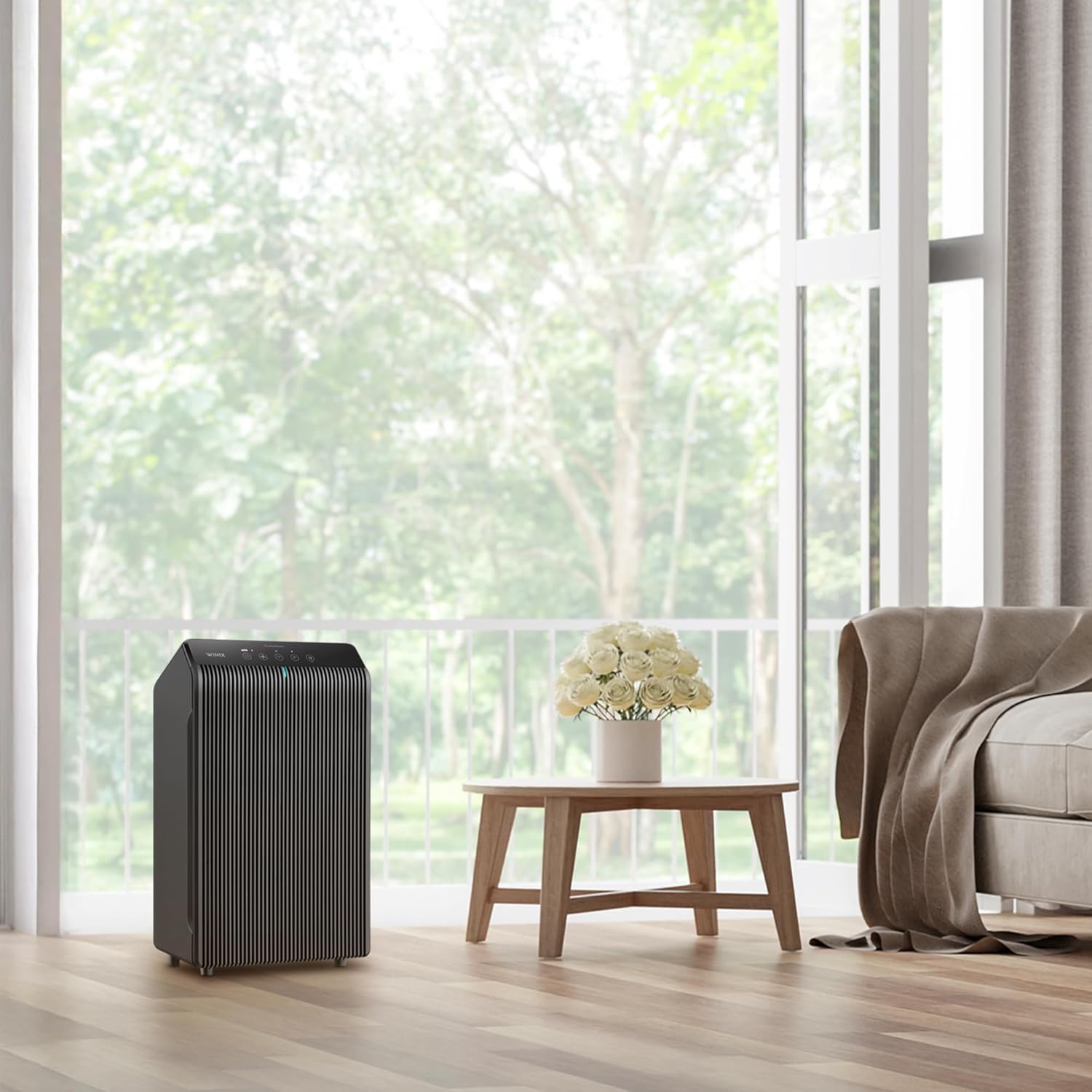
The Winix 5510 air purifier reflects this approach through its tower-style vertical design and integrated sensor array. The physical construction prioritizes airflow efficiency through bottom intake and top exhaust configuration, creating vertical air circulation patterns designed to process room air systematically. The unit’s footprint measures approximately 15 x 8 x 24 inches, allowing placement in corners or against walls without occupying significant floor space.
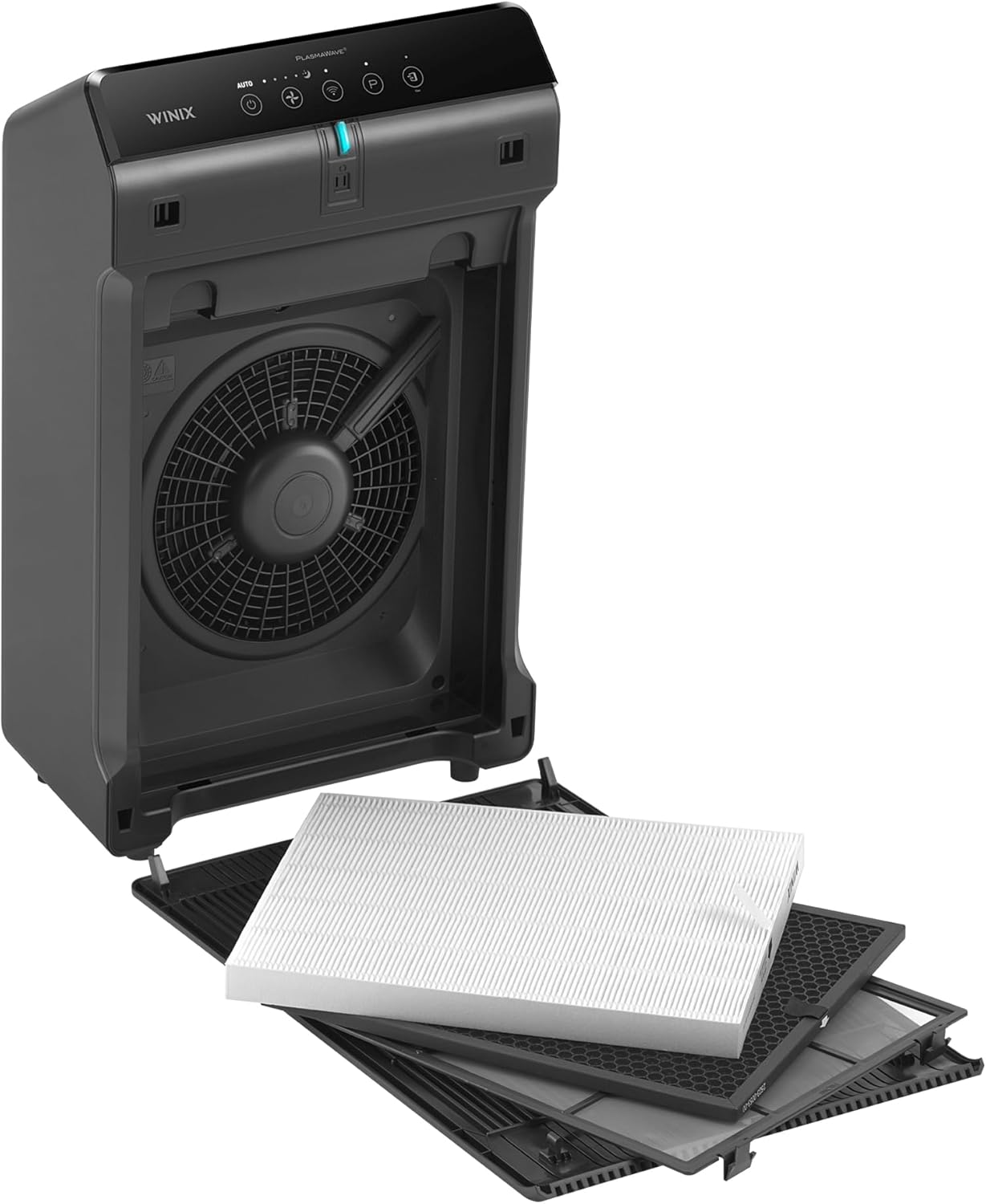
The housing utilizes durable plastic construction with ventilation grilles positioned to maximize air intake volume while maintaining structural integrity. The design incorporates a removable front panel that provides access to the filter compartment for routine maintenance and replacement operations.
Four-Stage Filtration System
The filtration architecture in the Winix 5510 air purifier employs a sequential four-stage process designed to address different categories of airborne contaminants. Each stage targets specific particle sizes and pollutant types, creating a comprehensive air cleaning system.
Stage 1: Pre-Filter – The initial filtration layer consists of a washable fine mesh screen that captures larger airborne particles including hair, dust, and lint. This pre-filtration stage extends the operational lifespan of subsequent filters by preventing large debris from reaching finer filtration layers. The washable design allows users to maintain this component without replacement costs.
Stage 2: Advanced Odor Control Carbon Filter – The second stage utilizes activated carbon filtration designed to adsorb volatile organic compounds (VOCs) and household odors. This layer targets gaseous pollutants that HEPA filters cannot capture, including cooking odors, pet-related smells, and smoke particles. The carbon filter structure features a pelletized design that maximizes surface area for chemical adsorption.
Stage 3: True HEPA Filter – The core filtration component employs True HEPA technology engineered to capture 99.99% of airborne particles as small as 0.01 microns. This specification exceeds standard HEPA requirements (which target 0.3 microns), addressing ultra-fine particulates including pollen, dust mites, mold spores, and pet dander. The filter media consists of densely packed fibers arranged to create maximum particle interception while maintaining adequate airflow.
Stage 4: PlasmaWave Technology – The final stage incorporates an electrical ionization system that generates hydroxyls to address molecular-level contaminants. This technology functions differently from traditional filtration, using electrical discharge to break down odor-causing compounds and airborne chemicals at the molecular level.
PlasmaWave Technology Explained
PlasmaWave represents Winix’s proprietary air cleaning technology that operates independently from mechanical filtration stages. The system generates positive and negative ions that combine with water vapor in the air to form hydroxyls—molecules designed to neutralize pollutants through chemical reactions rather than physical capture.
According to manufacturer specifications, this ionization process targets airborne viruses, bacteria, and chemical vapors that may pass through HEPA filtration. The technology operates continuously during purifier operation, creating a supplementary layer of air treatment beyond particle removal.
The PlasmaWave system is designed to avoid ozone generation, a concern with some ionization technologies. The manufacturer states that the process produces only water vapor and trace amounts of carbon dioxide as byproducts, addressing health considerations associated with ozone-producing air purifiers.
Users can disable the PlasmaWave function independently from the filtration system, allowing operation in HEPA-only mode for households preferring mechanical filtration exclusively. This design flexibility accommodates different user preferences regarding ionization technology.
Room Coverage & Air Processing Capacity
The Winix 5510 air purifier carries AHAM verification for rooms up to 392 square feet, indicating tested performance within this coverage area. The unit’s air processing capacity extends beyond this baseline specification, with the manufacturer providing additional coverage metrics based on different air change rates.
According to product specifications, the purifier can process air in spaces up to 1,881 square feet within one hour, though this represents a single air change rather than the multiple changes per hour recommended for effective purification. More practical coverage estimates include 940 square feet in 30 minutes, 627 square feet in 20 minutes, and 470 square feet in 15 minutes.
These varying coverage ratings reflect the relationship between room size and air exchange frequency. Smaller rooms receive more frequent air changes, resulting in more thorough purification compared to larger spaces where the same unit may struggle to maintain consistent air quality throughout the volume.
The clean air delivery rate (CADR) determines how quickly the unit processes contaminated air and returns clean air to the environment. Higher CADR values indicate faster purification, becoming particularly relevant in high-traffic areas or environments with continuous pollutant introduction such as homes with multiple pets or heavy cooking activity.
Smart Sensor System & Automation
The integrated sensor array continuously monitors ambient air quality, detecting particulate concentrations and adjusting operational parameters automatically. The system provides visual feedback through LED indicators that display current air quality status using a color-coded system.
The air quality indicator typically uses blue for good air quality, amber for moderate contamination, and red for poor air quality conditions. This visual representation allows users to understand environmental conditions at a glance without interpreting numerical data or technical measurements.
When operating in Auto Mode, the sensor data drives fan speed adjustments designed to balance purification effectiveness with energy consumption and noise output. During periods of detected air quality degradation—such as when cooking or when outdoor pollutants enter through ventilation—the system increases fan speed automatically. When sensors indicate improved air quality, the unit reduces operational intensity to conserve energy.
This automated response system eliminates the need for manual fan speed adjustment throughout the day, allowing the purifier to adapt to changing environmental conditions without user intervention. The automation becomes particularly valuable in households with variable pollutant sources or seasonal air quality fluctuations.
Operating Modes & Controls
The Winix 5510 air purifier offers multiple operating modes designed for different usage scenarios and user preferences. Manual mode allows direct fan speed selection across four settings: low, medium, high, and turbo. This control approach suits users who prefer predetermined operational parameters rather than automated adjustment.
Auto Mode engages the smart sensor system to manage fan speeds dynamically based on detected air quality. This mode optimizes the balance between purification performance and operational costs, reducing energy consumption during periods of good air quality while ramping up processing capacity when contamination levels rise.
Sleep Mode activates automatically when the control panel detects low ambient light conditions, indicating nighttime use. In this mode, the unit reduces fan speed to minimize operational noise while maintaining baseline air filtration. Display lights dim or deactivate to avoid sleep disruption, and the purifier operates at reduced capacity sufficient for overnight bedroom use.
The control interface includes a timer function allowing scheduled operation periods, useful for running the purifier before returning home or during specific times when air quality concerns peak. Filter replacement indicators track operational hours and alert users when maintenance becomes necessary, preventing performance degradation from saturated filters.
Filter Maintenance & Replacement
Routine maintenance for the Winix 5510 air purifier involves two distinct processes: pre-filter cleaning and component filter replacement. The washable pre-filter requires periodic cleaning—typically monthly under normal use conditions—to maintain optimal airflow. Users can vacuum the mesh surface or rinse it under water, allowing complete drying before reinstallation.
The True HEPA and carbon filters represent consumable components requiring replacement approximately every 12 months under typical residential use. Actual replacement intervals vary based on environmental factors including baseline air quality, pollutant sources, and operational duration. Households with heavy pet populations, smokers, or proximity to industrial areas may require more frequent filter changes.
The filter replacement process involves removing the front panel, extracting the saturated filters, and installing new components following manufacturer specifications. The system includes visual and audible indicators that alert users when filter replacement becomes necessary, eliminating guesswork about maintenance timing.
Replacement filters are model-specific, requiring purchasers to obtain compatible components designed for the 5510 unit. Filter availability and replacement costs factor into long-term ownership expenses, representing ongoing operational costs beyond initial purchase price.
Who This Air Purifier Is Suitable For
The Winix 5510 air purifier is best suited for:
- Households with medium to large rooms (300-600 square feet) requiring consistent air quality management
- Allergy sufferers seeking HEPA-grade filtration for pollen, dust, and pet dander removal
- Homes with pets where hair and dander represent persistent air quality challenges
- Users preferring automated operation through sensor-driven fan speed adjustment
- Environments with odor concerns from cooking, pets, or smoking where carbon filtration provides benefit
- Bedrooms requiring quiet operation during sleep hours through dedicated sleep mode
- Households seeking multi-stage purification beyond basic HEPA filtration
It may be less suitable for very large open-plan spaces exceeding 600 square feet where a single unit cannot maintain adequate air change rates, or for users who prefer minimal maintenance and find filter replacement schedules burdensome.
Real-World Performance Considerations
When evaluating the Winix 5510 air purifier for real-world applications, several practical factors influence its effectiveness beyond the technical specifications. Room layout significantly affects air circulation patterns. Open floor plans with minimal obstructions allow better air mixing compared to rooms with extensive furniture, dividing walls, or closed doors that impede airflow.
Placement location impacts performance substantially. Positioning the unit with adequate clearance around intake and exhaust vents ensures unobstructed airflow. Placing the purifier in corners or against walls works well provided ventilation grilles remain unblocked. Avoid placement behind furniture or curtains that restrict air circulation.
Ceiling height affects the practical coverage area. Standard 8-foot ceilings align with manufacturer coverage specifications, but rooms with higher ceilings contain more air volume, effectively reducing the air change rate for the same square footage. A 400-square-foot room with 10-foot ceilings contains 25% more air volume than the same floor area with 8-foot ceilings.
External pollutant sources influence filter lifespan and maintenance frequency. Homes near busy roads, industrial areas, or agricultural zones may experience faster filter saturation compared to suburban or rural environments with baseline clean air. Similarly, households with multiple pets or smokers place higher demands on filtration systems.
The PlasmaWave technology operates silently but adds a subtle electrical odor during initial use that typically dissipates within several days of operation. Users sensitive to such odors may prefer disabling this feature during the break-in period.
Energy consumption varies with operational mode and fan speed. Running continuously in Auto Mode typically consumes less energy than constant high-speed operation while maintaining adequate purification for most residential scenarios. Sleep Mode offers the most energy-efficient overnight operation.
Final Editorial Thoughts
The Winix 5510 air purifier is structured around comprehensive air treatment, combining mechanical filtration with ionization technology and automated environmental monitoring. Its design choices indicate a focus on addressing multiple air quality dimensions—particle removal, odor control, and chemical neutralization—through integrated systems rather than single-function filtration.
For households evaluating air purification solutions from a technical perspective—particularly those with medium-sized rooms, allergy concerns, or pet-related air quality challenges—this unit represents a multi-layered approach to indoor air management. The sensor-driven automation reduces the operational burden of manual adjustment while adapting to changing environmental conditions throughout the day.
The balance between filtration comprehensiveness, automated operation, and maintenance accessibility makes it suitable for users seeking reliable daily air quality improvement without complex setup or continuous manual intervention. The four-stage purification system addresses a broader spectrum of airborne contaminants than basic HEPA-only units, while the smart sensor integration provides responsive performance adjustment based on actual environmental conditions rather than preset schedules.
As an Amazon Associate I earn from qualifying purchases.


No Responses