KNKA Air Purifier for Large Rooms: An In-Depth Editorial Review
Clean indoor air has become a practical necessity rather than a luxury, especially in large homes, open living areas, and shared spaces where airborne particles can accumulate quickly. This editorial review takes a close, experience-based look at the KNKA air purifier for large rooms, focusing on how it is designed, how it operates in real living environments, and what type of household it is most suitable for.
This article is written from a neutral, research-driven perspective. No pricing comparisons, no customer opinions, and no promotional claims — only verifiable product structure, performance characteristics, and everyday usability considerations. The goal is to help readers understand whether the KNKA air purifier for large rooms aligns with their specific indoor air quality needs.
Table of Contents
- Design & Physical Construction
- Airflow & Room Coverage
- Filtration System Explained
- Operating Modes & Controls
- Noise Levels & Daily Use
- Maintenance & Filter Replacement
- Who This Air Purifier Is Suitable For
- Real-World Performance Considerations
- Final Editorial Thoughts


Design & Physical Construction
KNKA is a manufacturer specializing in environmental home appliances, with a product focus that includes air purifiers, humidifiers, and dehumidifiers. Founded in 2005, the brand emphasizes minimalistic design paired with functional airflow engineering.
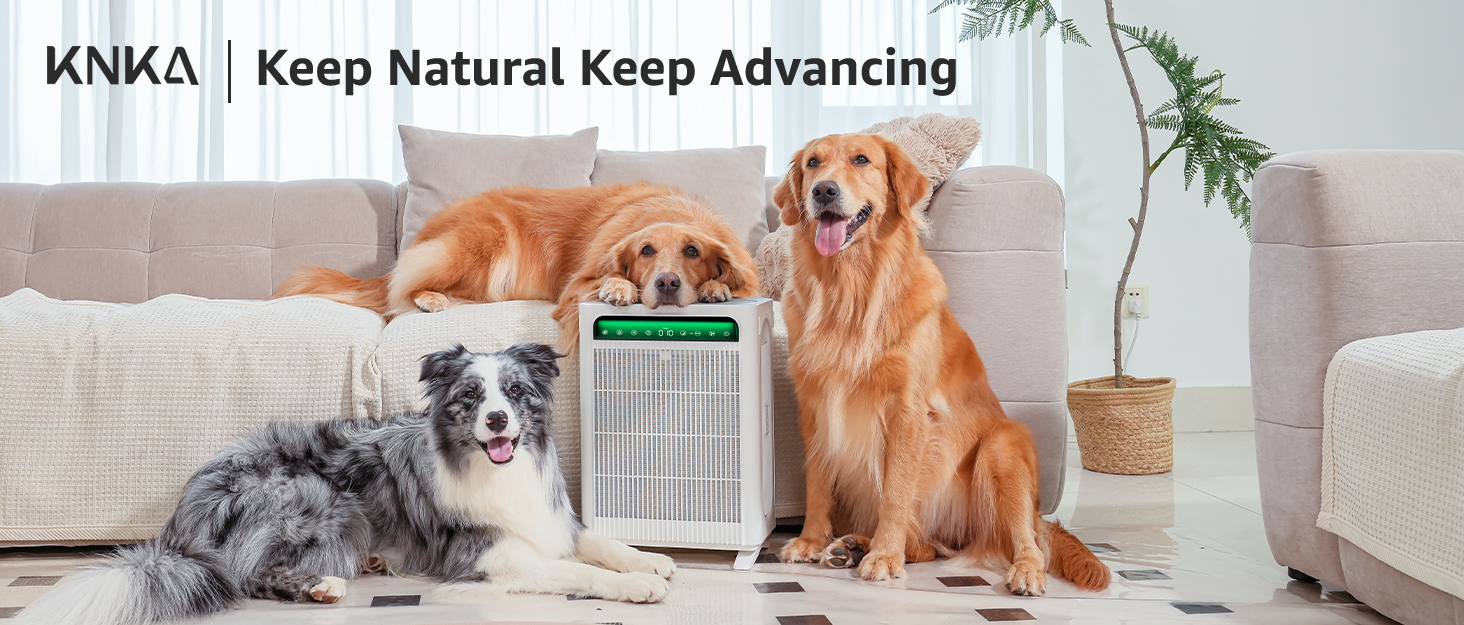
The KNKA air purifier for large rooms reflects this approach clearly. Its vertical form factor and neutral exterior are designed to blend into larger living spaces without becoming visually intrusive. The housing prioritizes airflow efficiency rather than decorative elements, which is typical of purifiers intended for continuous daily operation.
The unit’s footprint is designed to occupy minimal floor space while maintaining structural stability during extended operation. This makes it suitable for placement in corners, against walls, or near high-traffic areas where air circulation is most beneficial.
Airflow & Room Coverage
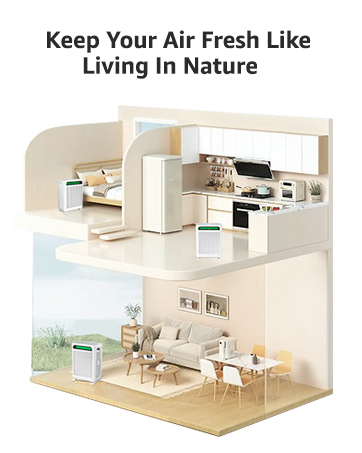
One of the defining aspects of this unit is its airflow architecture. The KNKA air purifier for large rooms uses a dual-intake configuration combined with multiple outlet paths, allowing air to circulate efficiently across larger floor plans.
According to manufacturer specifications, the airflow design allows the purifier to process air consistently across wide areas, making it suitable for open-plan homes, multi-purpose rooms, and shared living spaces where air exchange speed is critical. The unit is engineered to handle spaces where traditional compact purifiers would struggle to maintain consistent air quality.
The airflow pattern is designed to create a circulation loop that draws air from floor level, processes it through the filtration system, and redistributes it across the room. This vertical airflow approach helps address the natural tendency of airborne particles to settle at different heights depending on size and weight.
Filtration System Explained
The KNKA air purifier for large rooms utilizes a multi-stage filtration structure built around a True HEPA system. This configuration is designed to capture a wide spectrum of airborne particles, ranging from larger visible debris to finer particulate matter that typically remains suspended in indoor air.
The filtration system consists of:
- A washable pre-filter designed to capture larger particles such as hair, dust, and lint before they reach the main filter stages
- A True HEPA layer engineered for fine particulate filtration, targeting particles in the micron range
- An activated carbon layer intended for odor absorption and gas-phase contaminant reduction
The dual-filter layout allows air to be processed from multiple intake points, increasing filtration consistency across larger rooms without relying solely on high fan speeds. This design approach balances processing capacity with operational noise, which becomes particularly important in residential environments where the purifier may run continuously.
Filter accessibility is straightforward, with the filtration components housed in a removable compartment that allows for routine inspection and replacement without requiring tools or technical expertise.

Operating Modes & Controls
The control system is built around practical daily use rather than complex configuration. Multiple fan speeds allow the KNKA air purifier for large rooms to adjust to different room conditions, while automated modes respond to detected air quality changes in real time.
A built-in air quality indicator provides visual feedback through a color-coded display, allowing users to understand environmental conditions without technical interpretation. This makes the purifier accessible for households that prefer minimal interaction after initial setup.
The automated mode operates by continuously monitoring air quality and adjusting fan speed accordingly. During periods of detected air quality degradation, the system increases airflow capacity. When air quality stabilizes, it reduces operational intensity to conserve energy and minimize noise output.
Noise Levels & Daily Use
For continuous operation, noise management becomes a critical factor in user experience. The KNKA air purifier for large rooms includes a low-noise mode specifically intended for nighttime use or quiet environments such as bedrooms, home offices, and study areas.
In higher airflow modes, sound output increases proportionally, which is expected in units engineered for large-scale air movement. The overall acoustic profile aligns with typical expectations for high-capacity household purifiers, producing a consistent white-noise-like sound rather than mechanical clicking or irregular tones.
For users sensitive to ambient noise, the lower fan settings provide a balance between air processing capability and acoustic comfort. The unit’s noise characteristics are most noticeable during startup and mode transitions, after which sound levels stabilize.
Maintenance & Filter Replacement
Maintenance is designed to be straightforward and user-manageable. The unit includes a filter replacement indicator that signals when servicing is required, eliminating the need for manual tracking of filter lifespan. Filters are user-replaceable, and routine upkeep primarily involves periodic cleaning of the pre-filter to maintain optimal airflow.
For long-term performance stability, filter replacement intervals are typically measured in months rather than weeks, depending on operating environment and usage intensity. Households in high-dust environments or those running the purifier continuously may experience shorter filter lifespans compared to occasional-use scenarios.
The pre-filter is washable and reusable, which reduces ongoing maintenance costs. The HEPA and carbon filters, however, are consumable components that require periodic replacement to maintain filtration effectiveness.
Who This Air Purifier Is Suitable For
The KNKA air purifier for large rooms is best suited for:
- Large residential rooms or open-plan living areas where compact purifiers provide insufficient coverage
- Homes seeking continuous background air filtration without frequent manual adjustments
- Users who prefer automated operation and real-time air quality monitoring over manual fan control
- Households prioritizing airflow coverage and processing capacity over compact size or portability
- Environments where multiple occupants share common spaces, increasing airborne particle circulation
It may be less suitable for very small spaces where its airflow capacity exceeds practical requirements, or for users who prioritize ultra-quiet operation above all other performance characteristics.
Real-World Performance Considerations
When evaluating the KNKA air purifier for large rooms for real-world use, several practical factors come into consideration beyond technical specifications. Room layout, ceiling height, ventilation patterns, and existing HVAC systems all influence how effectively the purifier can maintain air quality.
In open-plan environments, the purifier’s effectiveness is enhanced by strategic placement near central circulation areas. Positioning near doorways, hallways, or high-traffic zones allows the unit to intercept airborne particles as they move through the space.
For households with pets, cooking areas, or outdoor access points that introduce frequent airborne contaminants, the purifier’s automated mode provides responsive filtration that adjusts to changing conditions. This adaptive operation helps maintain consistent air quality without requiring manual intervention throughout the day.
Energy consumption is another practical consideration for continuous operation. The unit’s automated mode and variable fan speeds allow for energy-efficient operation by scaling performance to actual air quality needs rather than running at maximum capacity continuously.
Final Editorial Thoughts
The KNKA air purifier for large rooms is structured around consistent airflow, multi-stage filtration, and long-duration operation. Its design choices indicate a focus on performance stability rather than aesthetic trends or marketing features.
For households evaluating air purification solutions from a functional perspective — especially in larger environments where air quality management requires sustained processing capacity — this unit represents a technically grounded approach to indoor air management. The balance between automated operation, filtration architecture, and maintenance accessibility makes it suitable for users seeking reliable daily air quality improvement without complex setup or ongoing technical involvement.
The purifier’s design philosophy prioritizes practical functionality over compact form factor, which aligns well with the needs of larger residential spaces where floor space is less constrained and air volume requires more substantial processing capacity.
As an Amazon Associate I earn from qualifying purchases.


No Responses